


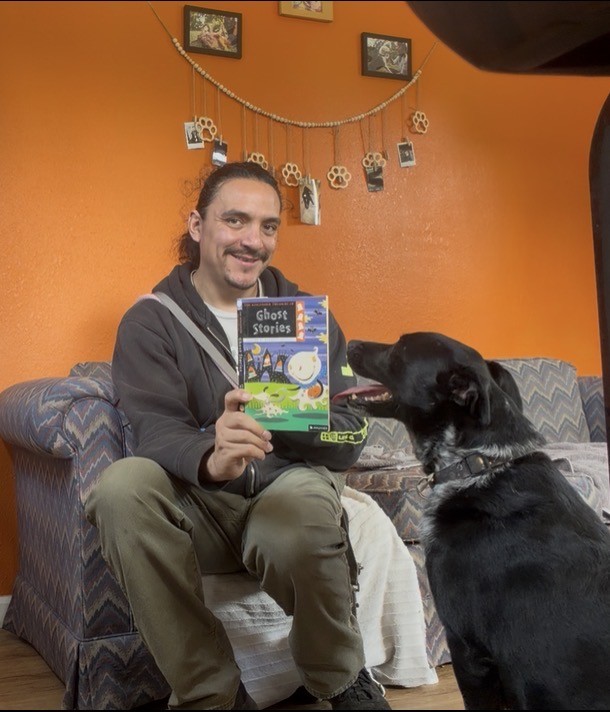
Meet Javier Valles, Animal Enrichment Worker at Austin Animal Services, serving Austin, Texas, and unincorporated Travis County. Javier is currently pursuing Shelter Care Specialist Master’s Level Certification. If you or your team is interested in strengthening skills in animal care, behavior support, and daily operations, invite them to apply for the next session of the Shelter Care Specialist Certification Program by June 12. (Offered at no cost, #ThanksToMaddie!)
Describe your role in three words.
Animal Welfare Professional.
What challenge or goal made you choose the Shelter Care Specialist Certification Program?
I wanted to transition my role from day-to-day technical execution into strategy, advocacy, and systematic change. I recognized that solving long-term bottlenecks requires a deep understanding of the industry’s best practices, and I wanted to gain the credible evidence base and data needed to advocate for better policy frameworks, resource allocation, and community engagement.
For my project in the Master’s level program, I want to leverage the best practices to advocate for operational balance and true capacity for care, ensuring that our population never exceeds our ability to provide dignified, high-quality attention. I believe that operational excellence is inseparable from safety and psychological well being. By implementing standardized safety protocols and fostering mental health awareness, we can combat compassion fatigue, and bring better support to the staff.
How has your experience in the program changed a specific habit or practice in your day-to-day work?
The most transformative shift in my daily practice has been moving away from viewing operational friction as a result of human incompetency, and instead recognizing it as a symptom of systematic failure. Before the program, it was easy to get caught up in the personal conflicts or frustrations when departments miss benchmarks. Now, my daily habit is to completely detach from the personal friction and look objectively at the structural flaws. I realize that a lack of detrimental accountability is rarely about individuals not caring, it is usually due to broken workflows, conflicts and priorities or total lack of cross-departmental transparency. This awareness allows me to focus my energy in efforts to improve and advocate for better protocols and a safer work environment.
What webinar do you wish everyone would watch, and what would you say to get a colleague to hit play?
Capacity for Care: Setting the Right Target & Finding the Tools to Stay There because it helps us understand how the number of animals in our care highly influences our safety and psychological well-being.
I would say: I see how exhausted you are, and I need you to hear me. You are drowning right now because the system is broken, not because you aren’t doing enough. This webinar completely validated my own burnout and proved that we cannot keep sacrificing our own safety and mental sanity to fix structural flaws that we didn’t create.
What resources do you share most often with your team?
Free, self-paced animal handling courses, webinar links, and book references from top national organizations, like Dog Handling in the Shelter and Fear Free Shelters. I actively push these open-access tools because we must equip our front line with the same baseline knowledge. When a shift gets chaotic, we cannot blame staff for bottlenecks if we haven’t given them the tools to understand the systematic flow. My favorite part of sharing these courses is when a coworker says “I didn’t know that! Thanks!” because this is the exact moment we stop fighting the chaos and start protecting our staff.
Who’s an animal that’s been important in your life, and how did they get their name?
Seven years ago, I was heading out the door to a completely different career when I looked down and saw a stray dog just sitting quietly on my porch. I didn’t know who he was, so I instantly called out “Hey Buddy!” The moment the words left my mouth, he bolted right past me and claimed my home at his safe haven. I did everything right: I scanned his microchip, called the dead-end phone number attached to it. I posted flyers and waited for someone to look for him, even posted him on Facebook and Nextdoor, but no one ever came.
As days passed, that casual greeting, “Hey Buddy,” transformed from a placeholder name into a profound promise of companionship. He didn’t just find a home that morning. He completely rewrote my life‘s purpose. Seeing his vulnerability and resilience firsthand was the exact spark that drove me to understand the systematic failures behind stray animals, inspiring me to step onto the shelter floor as a volunteer, and ultimately choose animals as my life‘s calling. So this is to Buddie: Thank you, best friend.
What is one thing about your efforts to make shelter medicine happen that you are proud of?
Choosing to lead by example and implement industry best practices directly into my own daily shifts. I have learned that if we want to be proactive, not reactive, we must remember that your ego is not your amigo. Pointing fingers to a bottleneck doesn’t solve anything, but changing our personal workflows does. By holding myself to the best practice protocols, I prove to my peers that keeping environmental stress low protects both the animal’s immune system and our own staff’s mental health and well-being.
Finish this sentence: Shelter medicine is…
Structural. It cannot function in chaos because medical protocol is completely collapsed the moment an environment becomes unpredictable and overwhelmed. When the facility operates in constant damage control mode, maintaining sanitary boundaries, securing accurate bilingual intakes, and tracking disease vectors becomes physically impossible. True medicine requires a foundation of stability, proving that you can never out-vaccinate or out-treat a system that allows chaotic overcrowding to dictate its daily operations.