


Dr. Cindy Karsten, KSMP Outreach Veterinarian
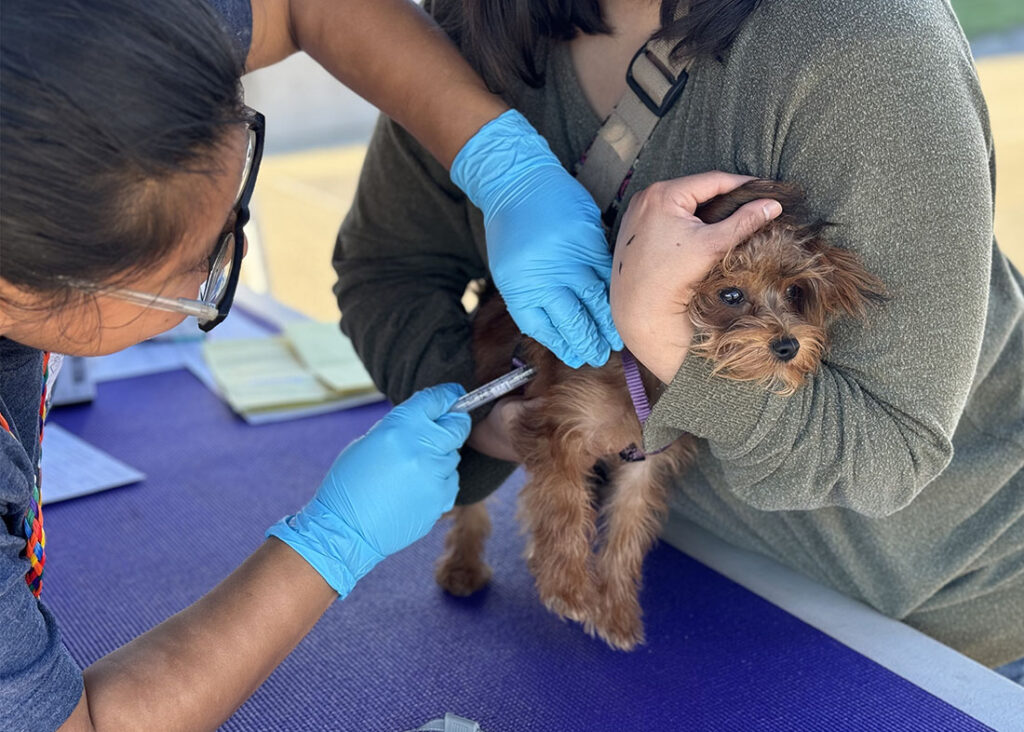
This step is repeated in shelter and clinic vaccination protocols everywhere, and I’m betting it’s in yours: After drawing up a vaccine and before administration, change the needle to minimize the pinch. But new research suggests1 animals can’t tell the difference.
In a double-blinded crossover trial, 75 dogs received both rabies and DHPP vaccines. Each dog got one vaccine with a replaced needle and one with the original needle used for draw-up. Researchers tracked heart rate continuously, and blinded observers scored every dog’s reaction.
The findings: There was no difference in dogs’ heart rates. No difference in reaction scores. Injectors couldn’t even tell which needle was new. They guessed correctly less often than a coin flip. And while this study was conducted in dogs, the biology behind it isn’t species-specific.
Routine replacement tradeoffs
Delivering Right Care includes honestly evaluating which steps actually serve animals and which steps just feel like they should. It turns out needle replacement probably doesn’t improve animal comfort, but it can cost us in ways that matter.
- Staff safety: Recapping is a leading cause of needlestick injuries. Every unnecessary swap is an unnecessary risk.
- Time and capacity for care: In a high-volume clinic or shelter, those seconds compound. Time recovered is capacity recovered.
- Waste and cost: For every vaccine given, that extra needle doubles expenses and disposal needs.
It’s worth noting that this study controlled for the number of septum punctures: even for the reconstituted DHPP vaccine, the non-replaced needle had only passed through one vial. The authors acknowledge that the study did not assess the impact of two or more passages through vial septa, which is what happens in practice with reconstituted vaccines like DHPP and FVRCP. However, the evidence is so compelling for single-vial vaccines, it’s likely one additional stick in a vial is not going to be what upsets our animals.
Focus on the experience, not the needle
If our goal is more comfort and less fear, anxiety, and stress, we should focus on the experience, not the needle. Fear Free handling is how we do that. Use the extra time to take a breath and connect with the animal in front of you. Share these tips to make the experience better for everyone:
- Offer yummy, high-value treats as a distraction.
- Choose vaccine injection sites based on animal comfort.
- Pet the area where the vaccine is to be given, then inject quickly.
- Record which vaccine was given where.
For years I’ve insisted that changing a needle after drawing up a vaccine and before administering is critical, an absolute must. I’ve taught it. I’ve expected it. Even as I write this, part of me wants to blind myself to new versus used needles and test it on my own hand before I fully believe it. That impulse is a little ridiculous, and it’s real. Old habits can be stubborn, even in the face of new evidence.
If you’re in the same boat, note that discomfort rather than brushing past it. Share the paper with your team, talk about it, and consider leaving the needle in place, especially if you’ve made just one or two passes through the vial.
Maybe you’ve been doing this already; now you have extra evidence to pass along.
What we don’t need to question: the impact of Fear Free handling. Practice Fear Free techniques with your team and include the steps in your intake and vaccine clinic SOPs. Free training is available. Check out our Shelter Care Specialist Certification Program and the Fear Free Shelter Program. Animals may not know what changed, but they will feel the difference—and so will your team.