


Dr. Jenn Bennett, Director of Veterinary Strategic Engagement
If you’re like many shelters, you may have a room tucked away for ringworm kitties, where your medical team or volunteers are now spending a great deal of time diligently treating, dipping, culturing, and rechecking these little ones, hoping that today is the day they can be moved onto the adoption pathway and into their new home. Or your shelter may not have the bandwidth to handle this intensive management; maybe your team is making hard decisions based on your capacity for care.
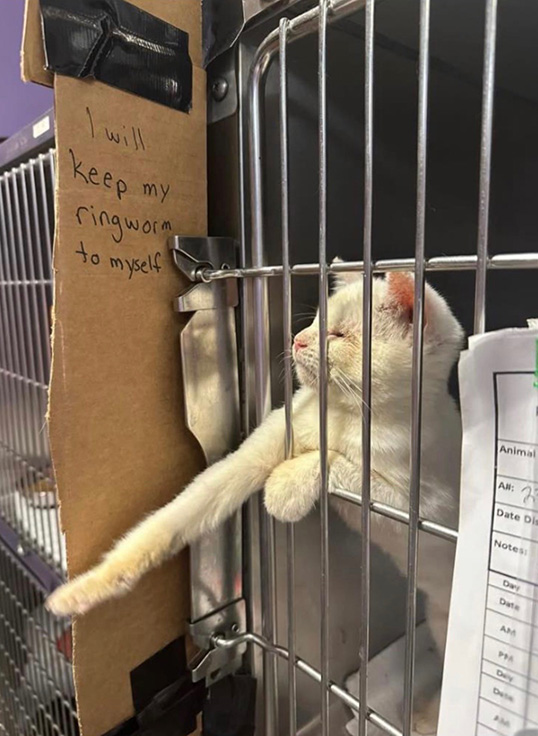
Fortunately, while ringworm requires treatment and management, it doesn’t have to stop a kitten cold in their outcome tracks or pull your team away from other animals waiting for care. Because kittens often feel just fine and still have age-specific socialization and behavioral health needs, taking steps to move ringworm care outside the shelter can have positive impacts on everyone involved—from your medical care team and foster parents and adopters waiting for their new friend, to the animals in your community with greater needs for shelter space.
Bust bottlenecks that slow down kitten pathways in the shelter by implementing one or more of these steps into your veterinary care protocols. These remedies will help decrease length of stay and staff workload, while increasing your capacity to provide care and positive outcomes for animals who don’t have alternatives to the shelter.
1. Shelter in place: For cats still in shelter housing or who are housed away from unaffected animals in a home environment, you can set up “ringworm shields” that create simple physical barriers to prevent swatting contact and fur transmission between housing units.
2. Schedule otherwise healthy ringworm kittens under treatment for spay and neuter surgery at the end of the daily line-up to minimize hairborne transmission. Unless there are larger lesions in the surgery region, these kittens do well. Consider a quick lime sulphur or Rescue wipe-down of the haircoat during surgery prep to minimize spores in surgery spaces. Do not saturate the coat (think surface wipe, not a bath!) to prevent kittens from losing body heat.
3. Create Ringworm Ready go bags: Complete with instructions and supplies, these kits help adopters and fosters continue treatments in their homes, so kittens can move out of the shelter more quickly. Download a customizable go-bag template for fosters or adopters . VIN also has ringworm explainers and environmental decontamination guidance aimed at fosters and pet owners.
4. Encourage volunteers or caretakers to make “Dip-N-Dry” boxes from simple inexpensive materials. This allows kittens to get their treatments while staying warm, social, and contained inside the foster/adopter home to keep the process less messy and stinky but still effective. Shout out to Amy Coy, a long-term foster parent with the Humane Society of Tacoma & Pierce County, for this creative idea and video.
5. All of these steps help make this final remedy possible: Make ringworm kittens viewable and available ASAP! Our fomite friends usually feel good, play like normal kitties, and will be scooped up quickly with good communication about how adopters can continue treatment and manage ringworm in the home. We know for certain that animals who are not available will stay longer in our care, causing us to miss opportunities with folks who are ready and willing to take on ringworm.
Trying a new ringworm remedy can feel overwhelming when your team is already maxed out. It takes intention and good planning to make the shift. Once we started using Ringworm Ready go bags at the Humane Society of Tacoma & Pierce County, it was awesome to see foster parents step up to lighten our load and adopters willing to take home kittens so their story together could start sooner.